Monday, May 12, 2008

Train Tracks


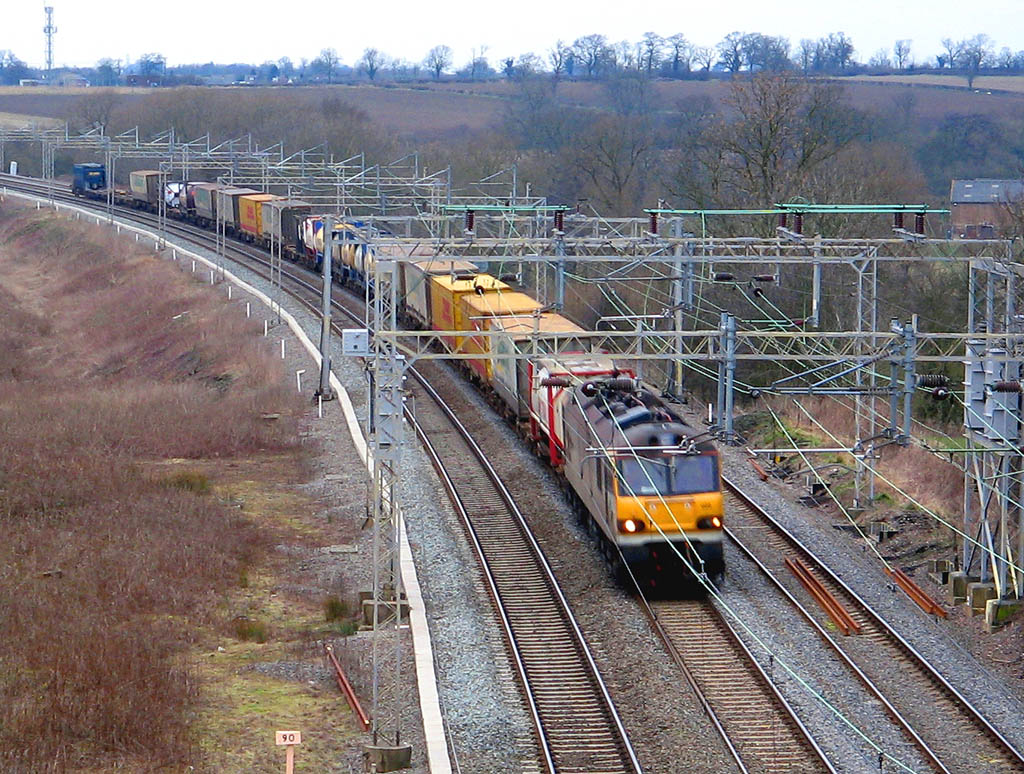
Before today, I never really thought of thought of train tracks as a marker of social class. I knew that Winnetka's tracks were below ground, and I always just assumed it was because they didn't like the noise or the sight of the train. I never knew the whole story. But when we were discussing it in class, I realized that it is a very obvious marker of social class. Seeing a big ugly train roll through your town everyday blowing the horn very loudly is unwanted. In a small rural town, people probably wouldn't think much of it. But in Winnetka, the train was a nuisance. When I was sitting in class, a story I heard on the news struck me. It was about a two year old autistic boy in Gary, Indiana who crawled away from his mobile home and was hit by a freight train thats tracks were right behind the house. Here is the link. As tragic as this is, it is a marker of social class. Because the circumstances are different, I don't think something like this could happen around the North Shore. Most people in the North Shore don't live within crawling distance of a train. It would be disruptive and I don't think people from around here would put up with it.

Tuesday, May 6, 2008

Class System Globally


In class, we've been discussing class a lot lately. But what if, instead of a class system in America, there was a global class system with each country representing a person. For example, would America be upper class? What about Mexico, the country right below us? Even with their close proximity, would they be lower class? What about China? They come from poverty, but they are on the rise. Would they be fulfilling the "American dream" of moving from one class to a higher one?

I think that if we looked at class from a global perspective, many things are the same as the class system in America. One example mentioned today in class would be how the rich can avoid the poor. In Great Gatsby, the ash-area is right next to the eggs, but the rich are never really exposed to it. If the world had a class system, I think America would ignore Mexico or try to separate itself from the poverty in central America and the Caribbean as much as possible. We do this even today. Americans may see a clip on the news about a hurricane in the Caribbean, but then switch channels and completely forget about it.


But would American claim itself as "middle class" as most upper class people tend to do? I think we would because there are certain responsibilities with being on top such as providing affordable health care to other countries. By not admitting we are on the top, we would avoid these responsibilities.

Another aspect of the class system is happiness. According to Newsweek, we are the 23rd most happiest country. Here is the list:


Country: population, life expectancy, GDP per capita
1. Denmark: 5.5 million, 77.8 yrs, $34,600
2. Switzerland, 7.5 million, 80.5 yrs, $32,300
3. Austria, 8.2 million, 79 yrs, $32,700
4. Iceland, 300,000, 80 yrs, $35,600
5. Bahamas, 303,800, 65.6 yrs, $20,200
6. Finland, 5.2 million, 78.5 yrs, $30,900
7. Sweden, 9 million, 80.5 yrs, $29,800
8. Bhutan, 2.3 million, 55 yrs, $1,400
9. Brunei, 380,000, 75 yrs, $23,600
10. Canada, 33 million, 80 yrs, $34,000


23. America, 303 million, 78 yrs, $46,000


Of all these countries, America has the highest GDP. Yet we are #23. Bhutan, the poorest country from the list, is 15 places higher. This once again proves that money does not equal happiness.

Monday, May 5, 2008

Kent State


Yesterday, May 4th, was the 38th anniversary of the Kent State shootings. For those of you who don't know the history behind it, here's a brief overview. On May 4th 1970, students on the Kent State campus were protesting the American invasion of Cambodia. People feared it would turn into a violent protest so the Ohio National Guard was brought in. The national guard ordered the crowd to disperse, but instead, the students threw rocks at the soldiers. The soldiers began to advance, and shots were fired. After the chaos died down, four people were pronounced dead and nine were wounded. Two of the students killed were participating in the protest, but the other two were walking from one class to the next. Although this event may seem like a long time ago, it is relatively recent in America's history. The Vietnam War was something our parents' generation fought to end. When I look back at the 60s, I think it was a great and terrible time to live. Everyday people were protesting and making a difference. This makes me wonder about our generation today. What are we doing to make a difference? It's not that we haven't had the opportunity to. The Iraq War today is very similar to Vietnam, with the exception of the draft. The president used indirect means to invade. War was not officially declared by the Senate. The war today does not have public support. But there are no large Iraq War protests. Students at colleges across the nation are not staging rallies. There is no large movement to protest. I'm not trying to advocate dissent. I just think our generation should step up and work to make our world a better place.
Sunday, May 4, 2008

Baby Names


This week, when I got my local newspaper there was an article that interested me. It talked about the trends in baby names. It also related with the discussions on social class we've been having. The article reviewed the top baby names in America in the past four decades. One aspect of baby names is the way the media can influence them. For example on the TV show Friends, Rachel named her baby Emma. In the next two years, the name Emma exploded.
Another aspect of the baby names is the way class plays into what name you choose. For example, In Gatsby, when Nick listed all the names of the guests in Gatsby's house, they were not very average names. They had a certain air to them, and they were not common names. This is also true with celebrities today. Babies of celebrities are getting names like Apple and Suri; not really names you think of off the top of your head.

Now the interesting thing is that names have a tendency to trickle down the economic ladder. The name Amber for instance, started out as a upper class name. But over the next ten years, it trickled down and became a pretty common name for anyone to name their baby. Will names like Apple and Suri trickle down?

Thursday, April 10, 2008

Media Blackmail


During junior theme, a lot of my research surprised me. But the most shocking discovery I made was that advertisements are starting to have an effect on the media. According to the articles I read, advertisers can censor the material magazines and newspapers cover. This is done by advertisers making numerous demands. For example, if Newsweek wanted to run an article on the adverse affects of smoking, Marlboro would pull their ad. Although this may seem like a minor problem, newspapers and magazines need revenue from ads to stay in business. They can't always afford to lose an account on behalf of an article. In this case, they'd just pull the article, which essentially is limiting freedom of the press. To give you an idea of how wide an impact this has, here is a list of all the brands Philip Morris owns:

Marlboro
Virginia Slims
Capri Sun
Country Time
Crystal Light
Kool-Aid
Tang
Maxwell House
Balance Bar
Cool Whip
Handi-Snacks
Jell-O
Cream of Wheat
Golden Crisp
Grape-Nuts
Great Grains
Honey Bunches of Oats
Honeycomb
Oreo O's
Raisin Bran
Shredded Wheat
Cheese Nips
Chips Ahoy!
Honey Maid
Newtons
Nilla Wafers
Nutter Butter
Oreo
Ritz
SnackWell's
Teddy Grahams
Triscuit
Wheat Thins
Planters
Milk-Bone dog treats
Altoids
Creme Savers
Gummi Savers
Jet-Puffed marshmallows
LifeSavers
Now and Later
Cheez Whiz
Cracker Barrel cheese
Di Giorno
Easy Cheese
Kraft
Velveeta
Breakstone's sour cream,cottage cheese
Breyers yogurt
Kraft macaroni & cheese and other dinners
A.1.
Grey Poupon
Kraft barbecue sauce, mayonnaise, salad dressings
Miracle Whip
Shake'N Bake
Lunchables
Oscar Mayer
Boca burgers
Claussen pickles
Tombstone pizza
Splendid
Miller Lite
Miller Genuine Draft
Miller Genuine
Draft Light
Miller High Life
Miller High Life Light

If any article in a magazine offends a single one of theses products, the magazine could lose several accounts. Basically, you probably won't print the article you wanted.


According the article Can't Live Without It by Alan Durning, "most American magazines reserve 60% of their pages for advertising...Newspapers are no different; in the United States, they typically contain 65 percent, up from 40 percent half a century ago" (3). In order for ads to print, they need to sell a certain number of ad pages. If companies are pulling their ads, they cannot meet their quota, and the magazine will lose money. This technique is essentially blackmailing the media into printing only articles it approves of.

Some see this as a huge problem. According to the article The Cost of Commercialism by Gray Ruskin, "Advertising is a 'powerful censor and influential taskmaster that systematically undermines a free and democratic press,' writes University of Pennsylvania law professor C. Edwin Baker in his book Advertising and a Democratic Press" (5). There are many examples to back Baker up.

One example includes, "when Fortune Magazine ran a 1997 cover story about IBM CEO Louis Gerstner describing his as arrogant and obsessed with status, IBM and its subsidiary Lotus removed their advertising--worth about $6 million a year--from the publication" (5). Although the ad company has the right to remove its advertising pages if it feels necessary, I think the practice of threatening is detrimental. Now Fortune Magazine probably feels it necessary to censor the articles it prints now for the benefit of the ads. But in reality, we should have freedom of press, and this essentially restricting it.